How Much Brand Frenzy is Enough for Swatch?
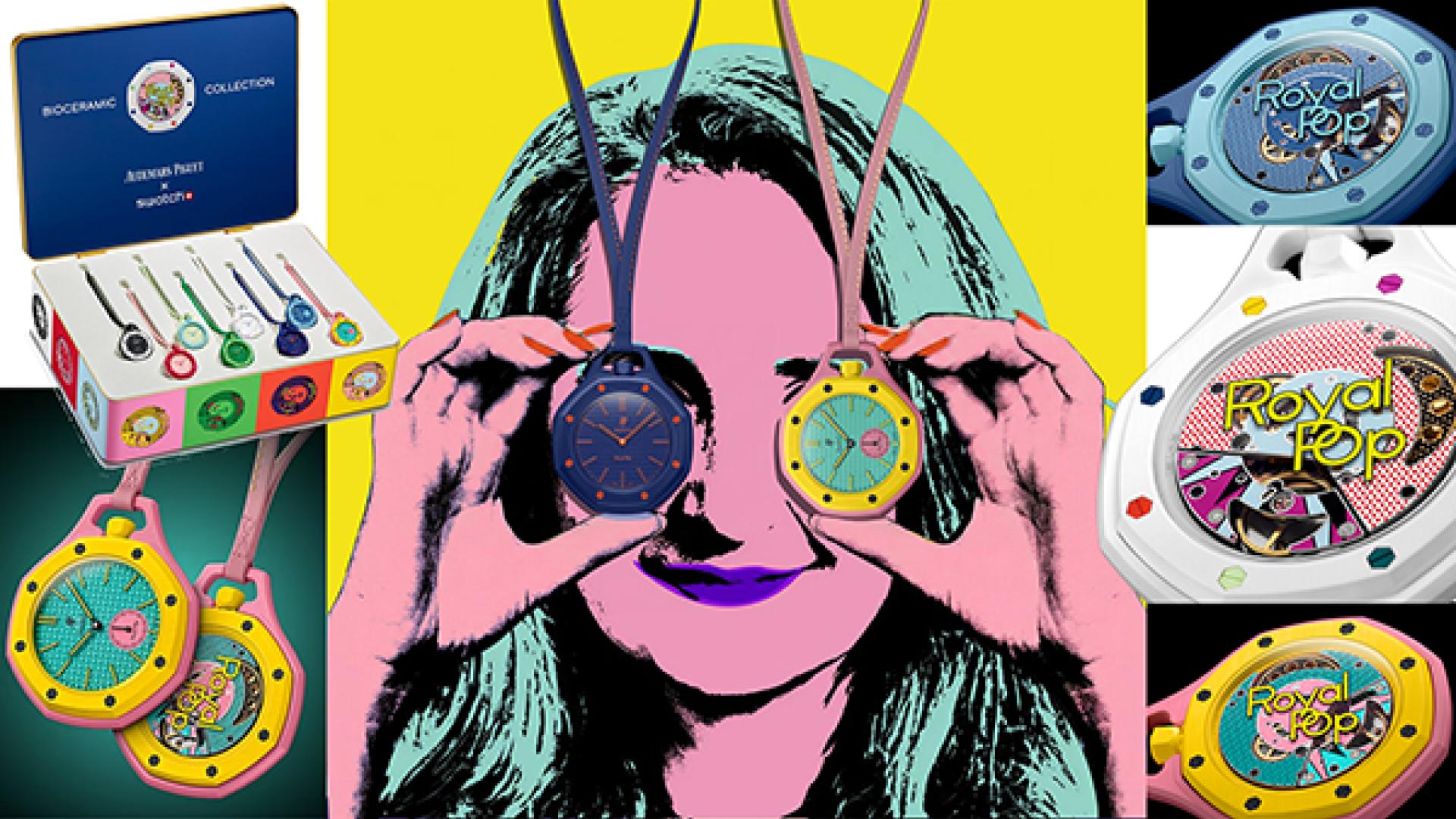
THE MEDIA STORM surrounding last week’s introduction of Swatch’s Bioceramic Royal Pop Collection has consumer brands looking on with wonder (and perhaps envy).
The brightly-colored pocket watches, co-branded with the Royal Oak brand from Swiss luxury watchmaker Audemars Piguet, have become a sensation among collectors. International media have gleefully covered restless shoppers queued up outside Swatch retail shops in the UK, Rome, Dubai, Singapore, New York while news releases about limited supply help add to the perception of scarcity.
A brisk secondary market for the Royal Pop watches has already taken hold, with consumers interviewed by Reuters and BBC reporting resale prices at 5X to 10X multiples of the $420 US list price.
Is this a formula other brands should try to replicate?
One argument in favor might be the astonishing number of media accounts of enthusiastic (possibly desperate) consumers lined up outside Swatch retail locations around the world. The BBC, Detroit News, Philadelphia Inquirer, even The New York Times have weighed in.
While some of the scenes are rather ugly, the value of all this organic media coverage is colossal. Swatch could not resist the opportunity to tweak the frenzy with this announcement:
To all our dear fans worldwide of our AP x Swatch collab, launched on May 16.
To ensure the safety of both our customers and our staff in Swatch stores, we kindly ask you not to rush to our stores in large numbers to acquire this product.
The Royal Pop Collection will remain available for several months.
In some countries/regions, queues of more than 50 people cannot be accepted, and sales may need to be paused.
— Swatch press announcement
What they’re made of
Swatch says its Royal Pop watches are made from a proprietary “bioceramic” material.
Bioceramic is a term commonly used to describe a kind of nylon plastic reinforced with mineral powder like talc, to enable a material that is moldable, harder and more easily colored. The “bio” part of the term refers to the use of some materials for medical implants, since it is minimally reactive and highly durable.
Swatch has been marketing casual watches made from its own version of this material since Sept. 2020. It says its watch case material is composed of zirconium dioxide ceramic powder, mixed with nylon polymer sourced from castor beans.
While the blend is proprietary, it doesn’t come close to the intrinsic value of a timepiece made of gold, other precious metals or gems. Its market value is therefore a matter of perception, which Swatch seems to have artfully manipulated.
Brand frenzy has happened before
For CPG brands here in the U.S. or their FMCG peers across the EMEA, the Swatch marketing strategy of perceived scarcity PR in lieu of a large advertising campaign is not part of the everyday playbook. Not all brands lend themselves to this approach. When certain items are collectible, however, they can sometimes take on a life of their own, accidentally or otherwise. Here are four of the greatest hits:
- Cabbage Patch Kids dolls were notable for news coverage of the notorious 1983 “Cabbage Patch Kids Riots” where desperate parents competed to obtain the toys in the run-up to the Christmas holiday. News media coverage of near riots at several large retail stores helped fuel the anxiety, ultimately boosting demand, and creating a collectors’ market bubble. Rumors of black market and counterfeit sales only helped add to the intrigue, Manufacturer Coleco, a toy industry leader at the time, sold $2B worth of the $18 dolls before it was all over.
- Tickle Me Elmo dolls, named for a favorite Sesame Street plush character were another holiday guilt trip for parents in 1996, when stores sold out of the $28.99 toy and set off a series of incidents at retail stores that were gleefully covered by television news. Tyco Preschool was a manufacturer. A resale market arose and some parents wound up spending ten times the list price to make their children happy that holiday season. The interactive toys remain available today at Walmart, Target and other stores. Its creator, Greg Hyman died May 19 and was remembered in this NYTimes obituary.
- Pokémon Cards remain a remarkably durable collectible since their launch in 1996 in Japan. Derived from a Nintendo video game, they went global in 1999, igniting a base of enthusiasts who valued certain cards for their gaming power. As young collectors came of age, some competed to complete a full 102 card “base set” and the company responded by publishing several series of powerful and visually striking cards in limited quantities, shrewdly driving up market value using deliberate scarcity. As their fans grew older and more competitive, prices rose.
- Stanley Tumblers became a viral phenomenon in 2023, after some limited edition 40 ounce Quencher insulated drinking cups were marketed on a women-centric shopping blog, The Buy Guide. The brand’s long prior history had focused on the type of drab but durable insulated bottles commonly found in lunch buckets. When colorful versions were released and unboxings began appearing on TikTok, a phenomenon arose and Quenchers became a status symbol for young women and girls. Stanley shrewdly added to the perception of scarcity by releasing several limited-edition versions.
Is perceived scarcity a business strategy?
Any manufacturer, Swatch included, can try to manipulate demand for its product by limiting the supply, but it won’t necessarily share in profits from the secondary market. To our knowledge, none of the examples cited here benefitted in that way.
Sustaining perceived scarcity might be a hedge against price discounting, however, and brands might consider planning their production and release schedules to avoid over-saturation of the market and generally manage their cost of capital and inventory investment. Certainly, artificial shortage as a tactic seems likely to backfire if applied to consumable products, where sheer velocity is a critical goal.