Food & Beverage Industry Growth is at a Crossroads
A strategic executive perspective for 2027: The next competitive battles will be won by manufacturers that reinvent growth, rebuild brand relevance, and redefine their shopper relationships.
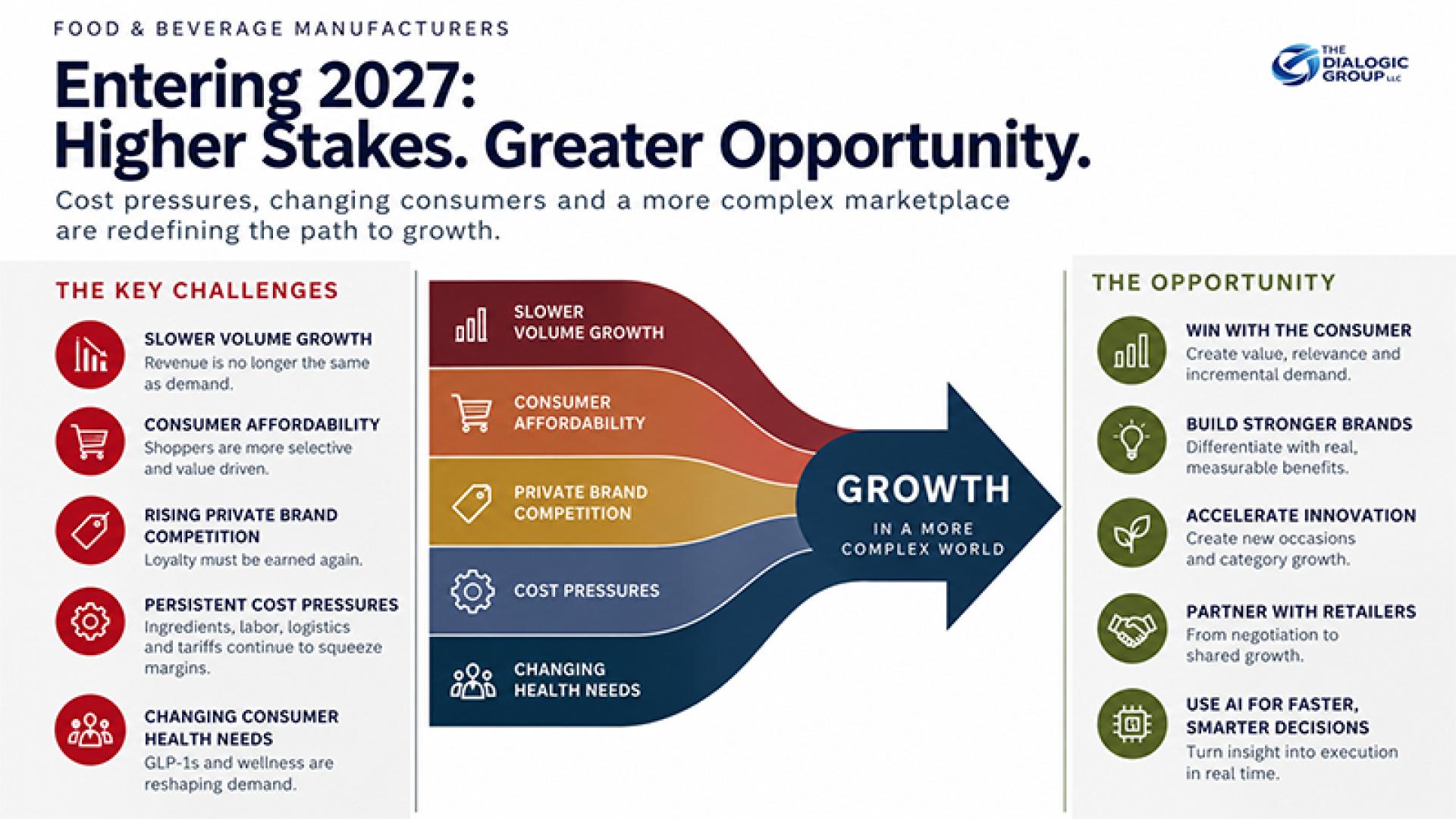
THE FOOD AND BEVERAGE INDUSTRY is entering 2027 with a fundamental problem: Its traditional growth model is losing effectiveness just as the cost of competing is increasing.
For decades, manufacturers relied on a relatively predictable formula: Build strong brands. Expand distribution. Introduce new products. Increase prices when necessary. Leverage scale to improve profitability.
That formula is no longer sufficient.
Circana projects U.S. food and beverage retail growth of just 2–3% in 2027, following years of inflation-driven revenue expansion. Underlying volume growth remains constrained, consumers are increasingly selective, and emerging competitors are challenging established brands.
The industry's next competitive advantage will not come from manufacturing more products. It will come from understanding changing consumer demand earlier, responding faster, and converting that intelligence into profitable growth.
The consequences extend well beyond slower growth. Manufacturers face an increasingly uncomfortable reality: They must invest more to remain relevant, operate more efficiently to protect margins, and fundamentally rethink how they create consumer demand.
Ten interconnected challenges
In the year ahead, a set of overlapping issues will combine to shape the industry's winners and losers. Each is consequential on its own. Together they present:
1. Volume crisis: Revenue growth is no longer enough
The industry's greatest threat is not slowing sales growth. It is the inability to generate sustainable increases in consumption. Years of pricing actions have supported revenues while weakening consumer purchasing power. Manufacturers must confront a critical question: Are their brands genuinely growing, or are they simply charging more for fewer units?
2. Affordability crisis: Consumer value is being redefined
Consumers are increasingly managing grocery spending through smaller baskets, promotions, private brands, and selective purchases. CoBank's October 2026 outlook anticipates continued food inflation into 2027, further pressuring household budgets. Traditional pricing and promotional strategies risk becoming counterproductive when shoppers perceive declining value.
3. Brand equity crisis: Loyalty must be earned again
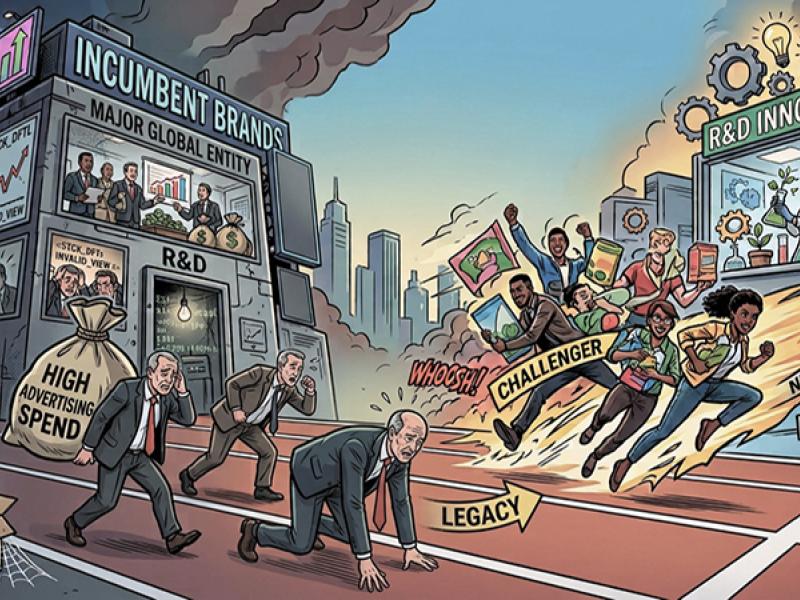
Brand recognition no longer sufficiently defends against substitution. Store brands reached a record $282.8 billion in U.S. sales in 2025. Through September 2026, their unit sales continued to outperform national brands. Retailers are becoming sophisticated brand owners, using shopper insights, quality improvements, and differentiated assortments to compete directly with manufacturers. The strategic threat is unmistakable: Brands that cannot demonstrate meaningful superiority increasingly risk becoming interchangeable.
4. Wellness transformation: GLP-1 restructures demand
Weight-management medications, a focus on protein, reduced sugar consumption, and changing definitions of wellness are fundamentally altering food choices. Circana estimates that households using GLP-1 medications could represent 35% of U.S. food and beverage unit sales by 2030. The implications extend beyond traditional health-focused categories. Portion sizes, snacking frequency, beverage preferences, meal composition, and product functionality could all change.
5. Innovation crisis: Incremental products cannot deliver transformational growth
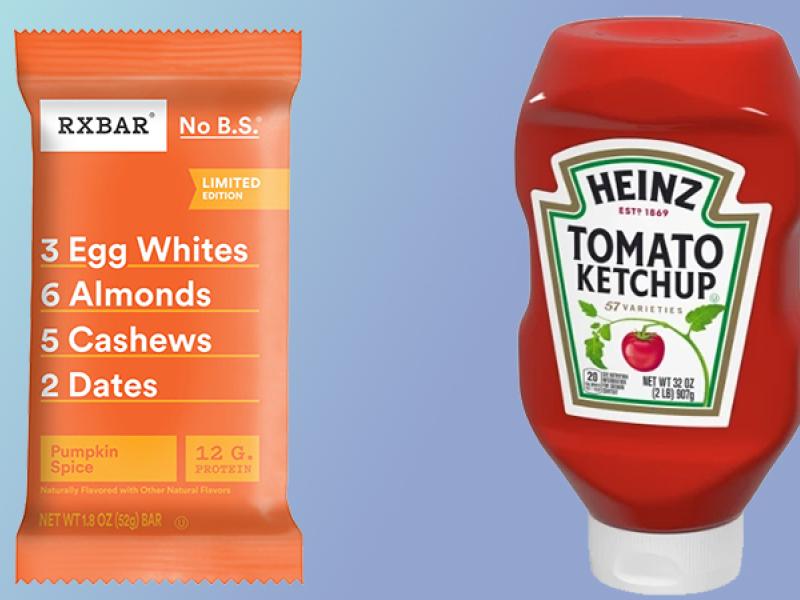
Too much innovation remains focused on online extensions, packaging changes, and flavor variations. These initiatives can defend shelf presence without creating significant incremental demand. Meanwhile, emerging brands are redefining categories around functional benefits, convenience, wellness, and differentiated consumption experiences.
6. Profitability squeeze: Structural productivity must replace repeated price increases
Manufacturers face persistent exposure to ingredient volatility, labor expenses, transportation, packaging, tariffs, and operating complexity. The challenge is increasingly structural, not cyclical. The objective must be to fund growth through productivity rather than relying primarily on consumers to absorb rising costs.
7. Retail power shift: Distribution is more and more expensive
Retailers increasingly control critical elements of brand visibility: shelf space, digital search, retail media, loyalty programs, and shopper data. Manufacturers risk paying more for access without gaining proportional incremental sales. FMI has identified retail media measurement as a significant industry challenge, particularly the need to demonstrate incremental value.
8. AI disruption: Competitive advantage depends on decision speed
AI is reshaping demand forecasting, consumer insights, marketing effectiveness, innovation, revenue management, and manufacturing performance. However, deploying technology without redesigning business decisions will produce limited advantage. A more consequential disruption is emerging AI-assisted shopping could increasingly influence which brands consumers discover, compare, and purchase.
9. Regulatory reset: Product portfolios face new scrutiny
Ingredient transparency, food additives, nutritional positioning, packaging requirements, and environmental accountability are becoming material strategic considerations. The FDA's Red No. 3 authorization revocation takes effect for food on January 15, 2027, while the agency works with industry to eliminate six additional certified colors by the end of 2027. Reformulation creates costs, but it can also create opportunities to differentiate.
10. Consumer intelligence gap: Manufacturers must understand demand as it happens
Perhaps the industry's most consequential challenge is the continued reliance on historical sales data to explain rapidly changing consumer behavior. Traditional research often reveals what consumers purchased but offers insufficient insight into why they switched, substituted, reduced consumption, or abandoned a purchase.
Leadership team mandate for 2027
Ou industry must move from defending yesterday's growth model to building tomorrow's demand engine. Five strategic questions should dominate every manufacturer's 2027 agenda:
- Where will genuine incremental volume growth come from, and what must we stop doing to fund it?
- Why should consumers continue paying a premium for our brands when credible alternatives are improving?
- How must our portfolio change as affordability, health, and consumption patterns fundamentally evolve?
- Can we convert productivity, AI, and retailer collaboration into measurable growth rather than simply lower operating costs?
- How do we transform consumer understanding from retrospective research into a real-time competitive advantage?
The defining strategic choice
The winners of 2027 will not necessarily be the manufacturers with the largest brands, greatest distribution, or most aggressive pricing strategies.
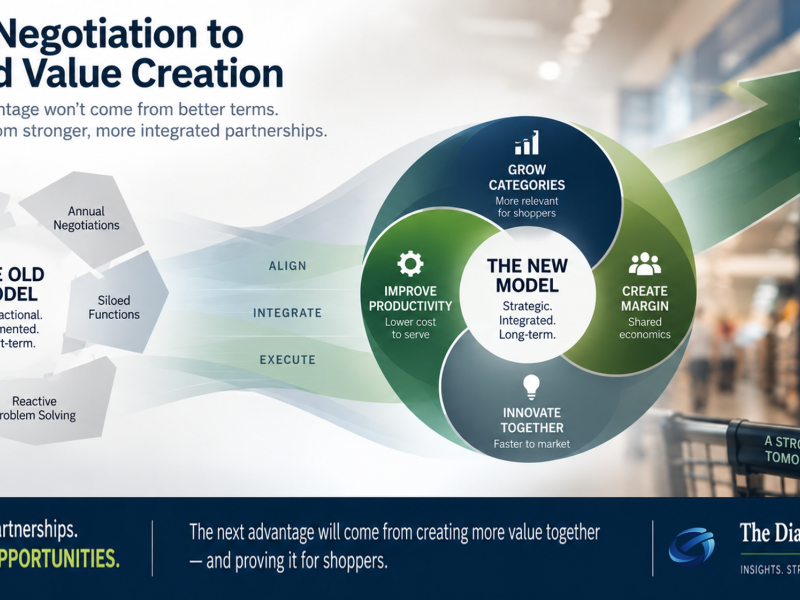
They will be the companies that most effectively reconnect consumer relevance with profitable growth. That requires a different management philosophy: fewer assumptions about demand, greater precision in consumer understanding, more disciplined capital allocation, faster innovation, and fundamentally stronger retailer partnerships.
The industry's next competitive advantage will not come from manufacturing more products. It will come from understanding changing consumer demand earlier, responding faster, and converting that intelligence into profitable growth.
For CEOs and management teams, 2027 should be viewed not as another challenging operating year, but as a defining opportunity to reinvent the economics of food and beverage manufacturing.
 Thom Blischok serves as Chairman and CEO of The Dialogic Group, LLC, where he provides strategic guidance to leading retailers, technology innovators, consumer packaged goods companies, and investment firms specializing in retail transformation, artificial intelligence/robotics, operations, and consumer engagement