When Loyalty Matters, Aim for the Category Ideal
Brand loyalty is impossibly hard. For decades, CPGs have been searching for the formula. In his inaugural Loyalty Matters perspective, Robert Passikoff, Ph.D. founder and president of Brand Keys, defines the new Category Ideal.
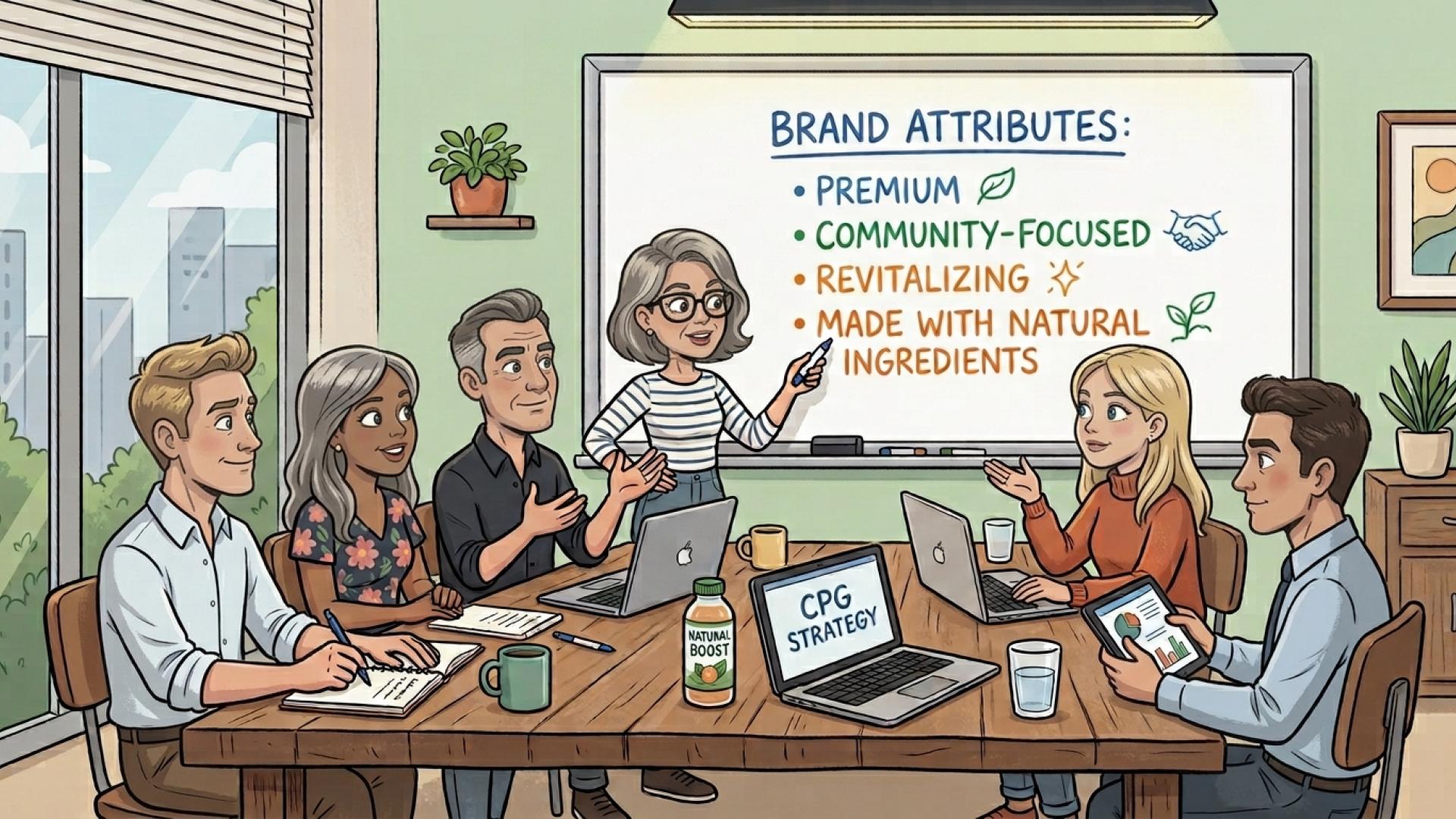
HERE’S A CPG CASE STUDY for you:
A CPG CEO asks the marketing team, "What do we do to build customer loyalty?"
The team proudly replies, "We're premium, community-focused, revitalizing, and made with natural ingredients."
The CEO nods and asks, "And our competitors?"
"They’re doing exactly the same thing, but in a slightly darker shade of green."
Funny, right? Well, not so much if you’re a CPG brand, I suppose. Brand loyalty is impossibly hard. You can't buy it, fake it, or build it in a day, no matter what colors you use. For decades CPG marketers (hell, all marketers) have searched for the secret to loyalty.
They’ve measured satisfaction, tracked repeat purchase, monitored market share, invested billions in “loyalty” programs and, in a triumph of optimism over evidence, treated stuff like Net Promoter Scores as though they were loyalty’s Rosetta Stone. They continue to confuse transactions with loyalty, and that confusion is becoming increasingly costly.
Loyalty, it turns out, has an annoying habit of refusing to follow a dashboard. And CPG brands have become so addicted to conventional benchmarking, categories have converged on the same personality (or have simply become category placeholders) even if they don’t have the same packaging colors).
Align with emotional expectations
The reality is loyalty has never been about what brands think they deliver. Or their personality. Well, not for the past 40 years, anyway. Today it’s about how closely brands align with what consumers expect. As expectations evolve at unprecedented speed, loyalty has become less a function of product performance and more a function of a brand's ability to fulfill the mostly emotional expectations consumers associate with the category where they compete.
(FYI, expectations across the CPG category have increased 26% YOY. Brands, alas, have not kept up. Not even close. But more of that later.)
That's where the concept of the Category Ideal becomes critical and exceptionally useful.
Consumers do not evaluate brands in a vacuum. If they did, marketing would be much easier and focus groups mercifully shorter. Instead, consumers maintain a category-specific standard – an idealized set of attributes, benefits, and emotional values that define their true desire, versus what they see a brand delivering. Every purchase decision is filtered that way. The closer a brand comes to fulfilling the Category Ideal, the greater its ability to create engagement, loyalty, and, axiomatically, profits.
A consumer purchasing laundry detergent, for example, is no longer evaluating cleaning performance. Today, every laundry detergent cleans! The Category Ideal, however, includes convenience, environmental responsibility, family safety, and trust.
Likewise, consumers choosing a snack brand assess not only what it tastes like (I mean, everything is going to be “palatable”), but also ingredient transparency, wellness benefits, authenticity, and whether the brand reflects their lifestyle values. Those are all now mandates. Oh, and sure, “won’t poison you” is critical, although that was or should have been an initial given, I dare say. But that’s just the way it works.
Put rigor behind the decision-making
This is not a theoretical construct. Brand Keys assessments have been successfully used in B2B, B2C, and D2C categories in 35 countries. It reflects how consumers actually make decisions and what they really expect.
Independently validated by organization like The Advertising Research Foundation, the Association of National Advertisers, the American Marketing Association, and the European Society of Opinion and Marketing Research, it’s a combination of psychological inquiry, a 3-step, higher order statistical analyses, combined with a gap analysis of complex category AI deliverables versus go-to-market success.
It has a test/re-test reliability 0.93 with results generalizable at the 95% confidence level. Market validations correlate with positive consumer behavior at 0.80+, a level at which, I would point out, social scientists dance naked on their desks while opening champagne. Our Customer Loyalty Engagement Index, now in its 28th year, was built upon this methodology. In 2026, we examined 1,119 brands in 106 categories, 22 percent of which were represented by CPG brands.
Rather than relying on traditional satisfaction metrics or 10-point scales, the predictive methodology acknowledges that the consumer decision process is more emotional than rational (70:30 at last count) and identifies the category-specific values consumers use to ascertain the Category Ideal. And that identifies the real drivers of loyalty, their relative percent contribution to loyalty. Oh, it also measures what expectations are held for those drivers and – and this is the essential outcome – how effectively brands fulfill those expectations.
Predictive measures and the expectation gap
Oh, and by the way, all the AI the world isn’t the “universal antidote” to your loyalty problem, in case you were thinking that! What you need is a predictive measure of loyalty that explains future consumer behavior rather than simply describing past behavior.
The challenge for CPG marketers (well, all markets, actually) is that Category Ideals are neither static, nor easily identifiable. They evolve continuously, faster than brands can adapt or traditional research efforts track. What consumers expected from a food, beverage, personal care, pet, or household products category a year ago is materially different from what they expect today. And what they expect today will be different again tomorrow.
Pet food is an interesting example because consumers increasingly treat pets as family members, fundamentally changing what “quality” means. Historically, pretty straightforward: nutrition, taste, affordability. Today – and here come the new, increased expectations – it’s premium ingredients, transparency, sustainability, and human-grade positioning. Want loyalty? Forget about offering to help just feed an animal. You need to help the owner become a better pet parent.
Consider bottled water. Once evaluated primarily on purity and availability, consumers increasingly expect sustainable packaging, environmental stewardship, and corporate transparency. In beauty and personal care, efficacy remains essential, but consumers also expect brands reflect their values, inclusivity, authenticity, and ingredient integrity. That kind of evolution explains one of the most important loyalty trends in the CPG marketplace: expectations increase faster than brand performance.
The result – and here’s the “more” I promised you – is a widening expectation gap, the distance between what consumers desire and what brands are seen to deliver. Cross-CPG categories, expectations have increased 26% YOY. Brands only kept up by 7%. That gap is both the biggest in the past decade, the biggest loyalty threat, and biggest loyalty opportunity for CPG marketers.
Brands that narrow the gap increase engagement and earn loyalty. Brands that allow the gap to widen inevitably see loyalty erode. “Satisfactory” product performance is a given. Table stakes. But brands also need convenience, personalization, transparency, sustainability, and authentic emotional relevance. (OK, not all of those all at once, but still. Attributes like those are no longer viewed as differentiators. They’ve become part of the baseline Ideal consumers expect and use to evaluate CPG brands.)
When emotional expectations eclipse functional ones
The plant-based food category provides a useful example too. Early adopters accepted compromises in taste because innovation itself fulfilled important emotional expectations. As the category matured, Beyond Meat, for example, experienced significant declines in sales. The plant-based pioneer has seen net revenues slide for four straight years, falling nearly 40% from its 2021 peak, which led to a Nasdaq delisting warning early this year.
That’s because consumer expectations have shifted. Sharply. Against ultra-processed foods, hurting brands that rely on lab-extruded meat substitutes in favor of clean-label whole foods. (FYI, to combat shrinking sales, the company recently dropped "Meat" from its name. If they had been measuring expectations the disloyalty factors could have been mitigated earlier. A lot earlier.)
If done correctly, expectations can be predictive of value and your brand trajectory 12 to 18 months before anything shows up on your tracker or social feed. In today's CPG environment, emotional engagement is increasingly responsible for marketplace success, because yesterday’s differentiator becomes tomorrows table stakes!
For household cleaning brands expectations shifted from “cleans well” to “cleans well, safely, conveniently, and responsibly.” The snack food category isn’t about tastes good, now consumers expect tastes indulgent. Oh, and makes me feel good about eating it. OTC health and wellness used to be evaluated on safety, efficacy, and price. Now expectations include transparency, clarity, and trust. Which is probably why private label has been eating category brands’ lunch.
The satisfaction distraction
BTW, I don't want to hear, “But my consumers are satisfied!” Because A) satisfaction is the price-of-entry, and B) satisfied consumers defect every day. Satisfaction keeps score. Expectations decide where consumers go next. Satisfaction measures past experiences. Loyalty is predictive of future activities. Consumers buy based on what they expect is going to happen next, not on what happened last time.
A shopper may be satisfied with a long-used cereal brand yet still switch to a competitor better aligned with evolving expectations as healthier or more natural. This loyalty dynamic has elevated the importance of emotional engagement, one of the most discussed yet least defined concepts in marketing. Too often, it’s inferred from awareness levels or measured via clicks, views, or social interactions.
Activity is not engagement. Nor is entertainment. Consumers love the puppies and ponies but don’t buy the beer. Or they like a commercial but can’t remember what brand it was for. As choice proliferates and switching costs remain low, emotional engagement has emerged as one of the few enduring sources of competitive CPG loyalty.
The meaning of meaning
And sure, price matters. But meaning matters more. During periods of economic uncertainty, conventional wisdom suggests consumers become primarily price-driven. Yet marketplace performance consistently shows that consumers remain loyal to brands that engage and best meet expectations. With that, behavior becomes more predictable, retention rises, advocacy grows, price sensitivity declines, and brand loyalty strengthens.
This trend is reshaping how loyalty should be measured, and for CPG marketers, the implications are clear:
So-called “loyalty programs” alone are insufficient, no matter how creatively wrapped. Reward programs are ubiquitous. These days, they’re the price-of-entry to play in the category. Is there anyone out there without one? It’s called “loyalty”, but it rarely creates it.
Consumer expectations should be measured and monitored. Preferably continuously. CPG evolves too rapidly for annual snapshots. I’d like a dollar for every email or text or site that asks, “Have we met your expectations?” when the brand doesn’t have a clue what those expectations are, let alone how to measure them accurately!
Innovation should be evaluated according to its ability to close CPG’s ever-widening expectation gaps. “New products” generate attention but almost certainly don’t create loyalty. CPG innovation used to mean inventing a new product. Now it’s updating logos, adding to the flavor pallet, or acquiring a nimbler enterprise.
Marketers must recognize that loyalty is not a post-purchase phenomenon. It begins long before the transaction occurs, established when consumers realize a brand better delivers against expectations that define their desire within a category.
The future of CPG loyalty will belong to brands that understand these loyalty nuances and apply this critical approach. And accept the fact that a slightly darker shade of green won’t do it!
In the end, loyalty isn’t about what brands sell.
It’s about what consumers expect.
Brands that forget that tend to become excellent CPG case studies.
Robert Pa ssikoff, founder and president of Brand Keys, is an award-winning brand strategist and market researcher specializing in predictive analytics, consumer loyalty, and emotional engagement. He created the Customer Loyalty Engagement Index, the world’s largest, most continuous database of brand loyalty assessments, encompassing 4.7 million respondents and 1,400 brands. His insights have helped Fortune 500 companies drive measurable brand performance across all marketing and advertising platforms. Dr. Passikoff is the author of Predicting Market Success, and NYU’s communications school named him “the most-quoted brand consultant in the United States.” He is a Gold Ogilvy Award recipient and ARF Research Innovator of the Year.