Food With Benefits: Innovation Abounds at SIAL 2026
Funky formulations ruled the roost at this year’s Paris trade show, giving plenty food for thought as to where new product development is headed in the next few years.
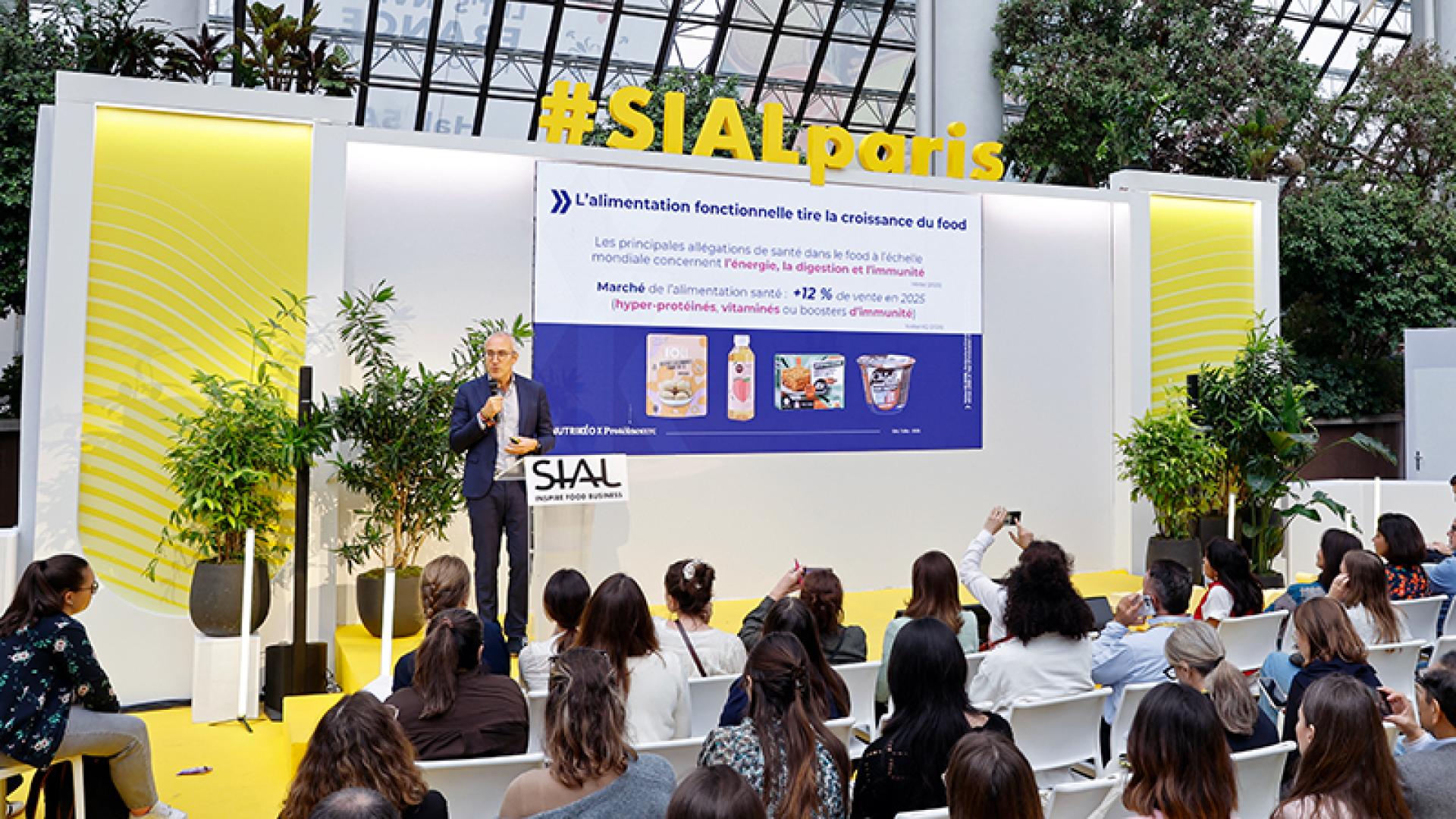
TO STAY ON TOP what’s happening in food evolution, there are few better places to look than the biannual SIAL Paris event. This event has been running since 1964 and today is known as the premier event for innovation, new product development, and getting a handle on what’s emerging as the key trends in product development.
The four-day 2026 extravaganza happened last week, featuring 775 products selected from over 2,750 entrants. Fortunately media coverage and the event’s superbly informative website allowed a good handle on what was making waves among the hordes of buyers and trade reps thronging the Parc des Expositions at Paris Nord Villepinte.
What really stood out was how the lines between standard grocery and specialist nutrition are becoming increasingly blurred these days. We had Italian manufacturer Liguori showcasing probiotic pasta, while Türkiye's Patislove touted yoghurt-coated fruit snacks brimming with prebiotics, probiotics and postbiotics. As far as the eye could see, biotics were very big news.
Protein is attaining its imperial arc
As always at SIAL, there was no shortage of detailed studies to take in around the event. ProtéinesXTC shared that French product launches boasting high protein content spiked 86% from 2021 to 2025. There’s that P-word again, the one that’s pretty much inescapable in every supermarket aisle these days. Formerly confined to sports nutrition categories, it’s now escaped confinement and is appearing everywhere from beverages to confectionery to daily staples.

Protein’s rampage isn’t unaccompanied. Gut health and fibre are receiving equal billing in recent years, as evidenced by SIAL’s prize-winning lineup. The obvious inference to take from this is that it speaks to a desire among consumers to be healthier, but it can also be seen as a push among manufacturers to premium-ize already-established ranges while charging that little bit extra. I’ll let you decide on that, dear reader.
Yet there actually is a sound commercial basis in adapting to dietary preference shifts that goes beyond simply unearthing the latest funky ingredient. The prevalence in GLP-1 usage are undeniably impacting how and what many of us eat these days as well as what categories grab share of wallet. This is already showing up in supermarket ranging, though it’s perhaps too early to assess whether these changes will prove permanent.
The Ozempic impact and its influence
A study from PwC published in June gave some interesting insights into GLP-1 influence on UK habits, with 70% of those surveyed reducing spend on confectionery and snacks with 60% lowering consumption of sugary drinks. High-protein items saw a 54% increase in purchasing alongside a 60% uptick on fresh produce. GLP-1 users remain a minority (around 5% of UK adults), but the shift in spend will be sufficient to alert those retailers looking to stimulate meaningful volume growth.
Read an earlier take on how GLP-1s are impacting assortments.
Findings from the US are even more striking. Using Numerator data, PwC estimates 21% of American households have at least one GLP-1 user as of May 2026. Per its tracked comparison, these homes had lowered grocery spending by 5.5% with salty snacks and sweets the categories hit hardest. Some spend had transferred to protein and fresh, but it’s also feasible that some parts of the CPG business simply have fewer calories to sell.
Not that this indicates all shoppers are tucking into meals designed by nutritionists. Long before we ever heard of Ozempic, nutrient-dense options and portion control were attracting plenty of attention. In many cases, the addition of medications simply compounded already-extant behaviours, creating additional demand for lines appealing equally to those seeking to manage weight or simply being more judicious in their meal choices.
New frisson for familiar foods
For more on that, we had Ashley Ebner from Canada’s Seenergy Foods, whose talk to attendees covered potential evolution of eating habits. Her key point was that instead of constantly searching for the next exciting ingredient, CPGs would be better served by rethinking the presentation of familiar foods. If consumers crave fibre and protein, she argued, then lentils and beans are the ideal solution. The way to win here, though, is by recalibrating their appeal away from the widely-held perception of these being niche “health” foods towards more palatable full-meal options.
By way of demonstrating how this might be achieved, consider Panvivo GLP1ve from Italy’s Millbo. This is yet another nutrient-dense line, this time in bakery, that mixes sprouted grains and pulse flours along with fermentation-based ingredients to bolster the nutritional aspects of bread.
Millbo is going deep on the research here, teaming up with sensory-neuroscience firm Thimus to gauge consumer response to such formulations. However, ultimately the goal is pretty simple: how can we make regular products relevant to dietary demands without the eating quality being compromised?
While it may perhaps be too soon to evaluate the longer-term impact of GLP-1s on NPD, there’s every chance it may play a sizeable role in how established products are reconfigured instead of simply being a jumping-off point for the 21st century version of Weight Watchers meals.
Own brand eyes an opportunity
This development should be of interest to the ever-growing private label manufacturing segment as it looks to enhance the nutritional element of everyday grocery SKUs that appeal to the widest audience possible. And, as if to prove this point, as I’m typing this I see the UK’s Tesco has just announced new own-brand nutrient-dense additions to its Plentifuel range.
This speaks to another big theme at SIAL, that private label is getting increasingly sophisticated these days. In the view of Italian CPG La Doria, own-brand innovation was now essential as retailer sought a competitive edge over rivals via their in-house ranges. Furthermore, demand was rising for higher-tier items. Suppliers capable of creating new formulations allowing chains to take on A-brands on more than simply price are in greater demand than ever right now.
For a deeper dive into the inexorable rise of premium private label, I recommend this piece.
For an idea of scale, NIQ research issued just ahead of SIAL is a pretty good guide. In five key European markets, 46% of FMCG product launches were private label, up 4% YoY. Over 83,000 new own brands hit the shelves during the surveyed period, with additions on average priced at 9% higher than existing house brands, a clear sign that many retailers are leaning on NPD to stimulate trading up.
But lest we get too over our skis, NIQ also found that sales value of innovative private label was down 2.1% over the period versus growth of 1.8% for branded goods while sales velocity saw a 6.9% dip. The conclusion may well be that we aren’t generating more spend by intensifying new launches, especially when these are thrown into the mix alongside established lines to be considered by shoppers who are minded to be highly selective about what they put in the basket.
Making it in the market
“Food with benefits” was a much-repeated refrain at SIAL 2026 and that was borne out by almost all the headline-making products and manufacturers in attendance. The innovation didn’t only cover what ends up in our stomachs, either: there was ZEEN Tech’s cooking and frying process using water instead of oil; NÜKT finding a way to make crisps without using oil, and aluminium-free aseptic cartons by SIG and LSDH that lower the packaging’s carbon footprint by 19%, already destined for an unnamed French retailer’s own-brand range in 2027. If you fancy diving deeper into all, then be sure to pay the SIAL website a visit.
As always with events like these, you find yourself wondering how much of this NPD will actually make it to shelf. With economies everywhere taking on distinctive K-shaped aspects, there may come a moment very soon where suppliers and retailers will need to take stock of how much premium the higher end can accommodate.
Personally, I envision a role for what might be called “liminal” products that occupy the upper end of lower- or mid-tier ranges. Just enough nutritional utility or flavour novelty to justify costing that little bit extra, but providing the retailer sufficient leeway on margin. This could become an area worthy of exploration if current economic predictions hold.
Certainly, it’ll be intriguing to find out what the industry focus will be when SIAL next rolls around in 2028. For now, though, we should applaud the artisans and imagineers working tirelessly to satiate the never less than rapacious appetites of consumers everywhere for new sensations.
Howard Lake is a retail commentator with over 14 years’ experience and writes extensively on the retail industry at his Retail Slop Substack. howardlake@virginmedia.com