The Consumer Decides Before They Explain
The nonconscious is the brain’s fast operating system that continuously compresses prior experience, sensory input, emotion, memory, and context into rapid predictions.
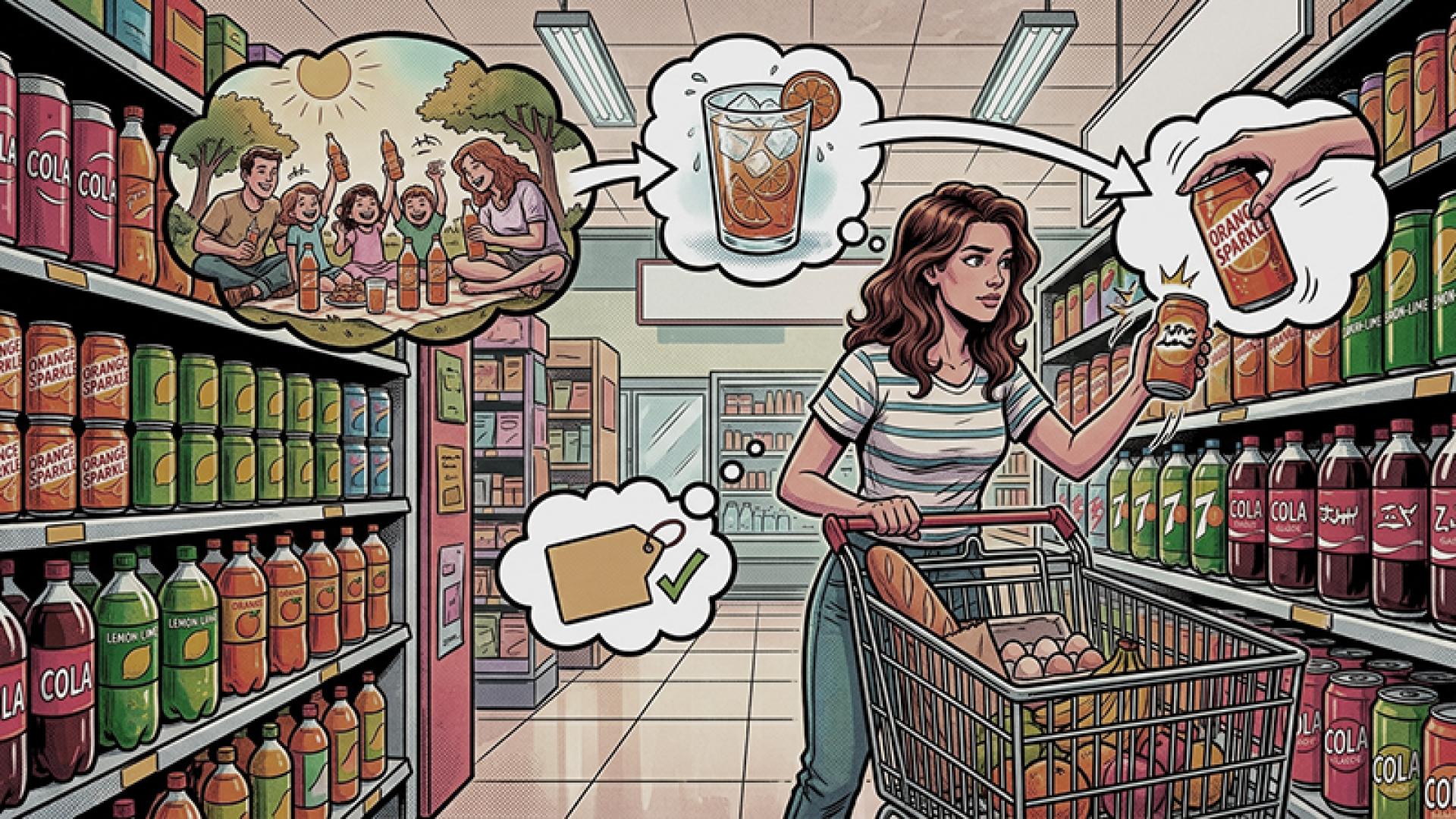
WALK INTO ANY GROCERY AISLE and watch the magic that really happens. The consumer does not stand there like a rational robot, building a spreadsheet of features, claims, and prices. Their eyes move, a color catches, a logo or shape feels familiar, and a slogan reassures. A memory is awakened, and a “buy” decision begins forming before the consumer even knows about it. How can the consumer articulate their unarticulated thoughts? This is the science of the nonconscious at work.
The nonconscious is not some mysterious hidden brain. It is the brain’s fast operating system that continuously compresses prior experience, sensory input, emotion, memory, and context into rapid predictions. It actually is an integral part of the energy consumption mechanism of the brain. Conscious thinking is computationally expensive and consumes energy, whereas nonconscious thinking performs the same calculations at a “low token cost” to use a GenAI expression.
The conscious mind often arrives afterward and supplies an explanation.
For a CPG marketer, that distinction is enormous. We spend months perfecting a rational proposition. The shopper may give us two seconds to absorb our RTB (reason to buy) and USP (unique selling proposition). In fact, it will take you more than two seconds to even say these acronyms aloud.
What triggers a positive nonconscious desire?
A positive response is the awakening of nonconscious desire — when something goes from would be nice to have to “I want it,” to “I need it,” to “I’ve absolutely got to have it.” Neurotransmitters are deeply involved in desire. Familiarity is driven by sensorials: shapes, colors, textures, and fragrances that carry the aura of familiarity trigger serotonin releases in the brain. But familiarity alone becomes wallpaper, so the strongest assets combine familiarity with a healthy dose of novelty – the dopamine driver from unexpected newness. Brands and products have the same relationship with the consumer as human relationships do. The comfort of knowing and the thrill of the unknown; this makes for healthy connections.
Trust in a world that is inherently untrustworthy is the next big driver of nonconscious desire. Oxytocin creates trust and bonding in humans, and is truly the connective tissue in desire. Whether it is the language of science, influencers, stars, leaders, doctors, or philosophers, unassailable authority becomes the currency of the land. Trust is also delivered when there is authenticity of connection. Understanding what drives the consumer’s amygdala or Limbic system is an important component of empathizing and building real relationships with the consumer.
Simplicity, also known as cognitive fluency, is a big component of nonconscious desire. Apple created simplicity with a remote with a few buttons instead of 10,000. Simplicity finds its niche even in the language used to describe products. Concrete sensory words usually beat abstract corporate language. “Crisp,” “cold,” “silky,” “fresh,” “slow-roasted,” “gentle,” and “burst” invite simulation inside the brain. The consumer can almost feel the experience before buying it, and it feels simple enough and easy enough to enjoy.
Sound and scent are particularly powerful because they can become simple retrieval cues. A few notes, a package opening sound, the hiss of carbonation, the smell associated with clean laundry or fresh coffee: repeated consistently, these cues become shortcuts into memory and emotion. The brain loves hacks and shortcuts.
Coca-Cola is a masterclass. Red and white. The Spencerian script. The contour bottle. Condensation. Ice. The visual suggestion of cold refreshment. In 2026, Coca-Cola reinforced this logic globally by sharpening its visual system around the distinctive assets people already know and love.
Belonging and tribalism are another key component of nonconscious desire. You see the frenzied energy of soccer fans, the utter energy of Swifties, and the total belief of political acolytes. This is tribalism at its finest and its most primal. Long lines in an Apple store awaiting new product releases speak of the commercial value of “fandom”. And finally, the sense of self-worth is the last component of nonconscious desire. It is an appeal to the aspired self of the customer. The grand vision of themselves they hold on to so dearly in their minds.
P&G, Unilever, L’oréal, are all great brands that have built successes based on nonconscious desire. They all deal with the nonconscious desires of consumers as they go through their daily lives, adding beauty and vibrance to billions of people as they go about their day.
Why does this work?
At Sensori.AI, we have translated this deep understanding of nonconscious desire into tools that measure it. We call this algorithmic neuroscience. Our platforms measure the effectiveness of advertising using nonconscious desire. The Innovation Success Prediction platform measures how desire translates into commercial success in both early-stage and late-stage innovations. Might it be time for the CPG industry to retire ancient bases and try something grounded in cutting-edge neuroscience and the future? Only time will tell.
Package effectiveness platforms measure if packaging will break through shelf clutter and touch the nonconscious mind of the consumer. Brand Resonance platforms measure if the nonconscious mind will recognize brand assets and resonate with them effortlessly.
For CPG marketers, Neuroscience of the Nonconscious opens doors into the consumer's heart and mind they have never had visibility into, and with tools to measure effectiveness accurately.
Winning brands have always known this intuitively; our algorithms make it explicit.

Dr. A.K. Pradeep is a highly-experienced Silicon Valley entrepreneur, recognized for having launched a series of successful firms across a number of categories. Most recently, he is the founder and CEO of Sensori.ai, the only global company specializing in the unique combination of Generative AI and Neuroscience. The company applies proprietary algorithms to create Product Innovations, Packaging, Advertising, Music, Fragrance, Flavor, Market Messaging and Creative Content that is guaranteed to create Desire in the Consumer’s Brain.