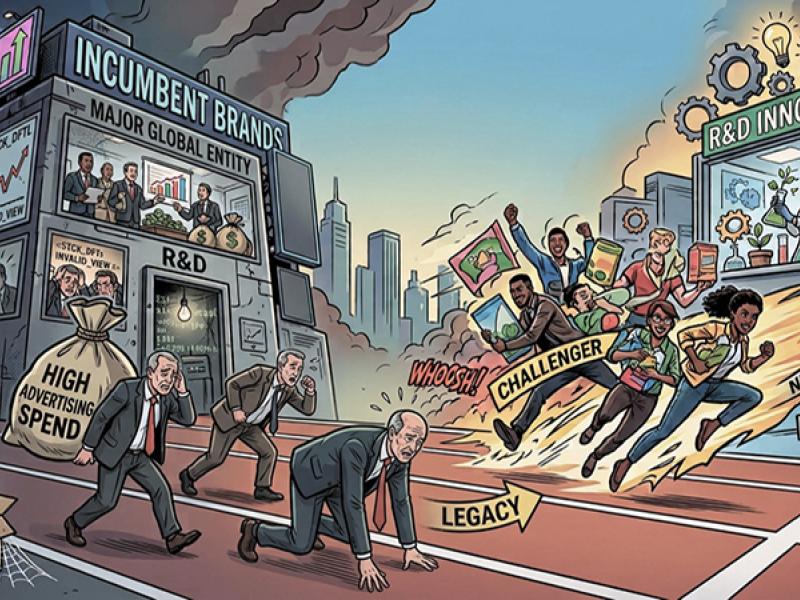
The Annual Supplier Negotiation May Already be Obsolete
For years, retailer-supplier relationships centered on an annual cycle of cost negotiations, trade funding arrangements, promotional calendar planning, and margin discussions.
In today’s evolving retail environment, characterized by retail media, digital commerce, AI, supply-chain automation, private brands, and rapidly shifting consumer behaviors, this traditional approach has become increasingly outdated.
AT THE BARCLAYS Global Consumer Staples Conference last month, Procter & Gamble CFO Andre Schulten outlined his company’s focus on transforming retailer partnerships over the next three years.
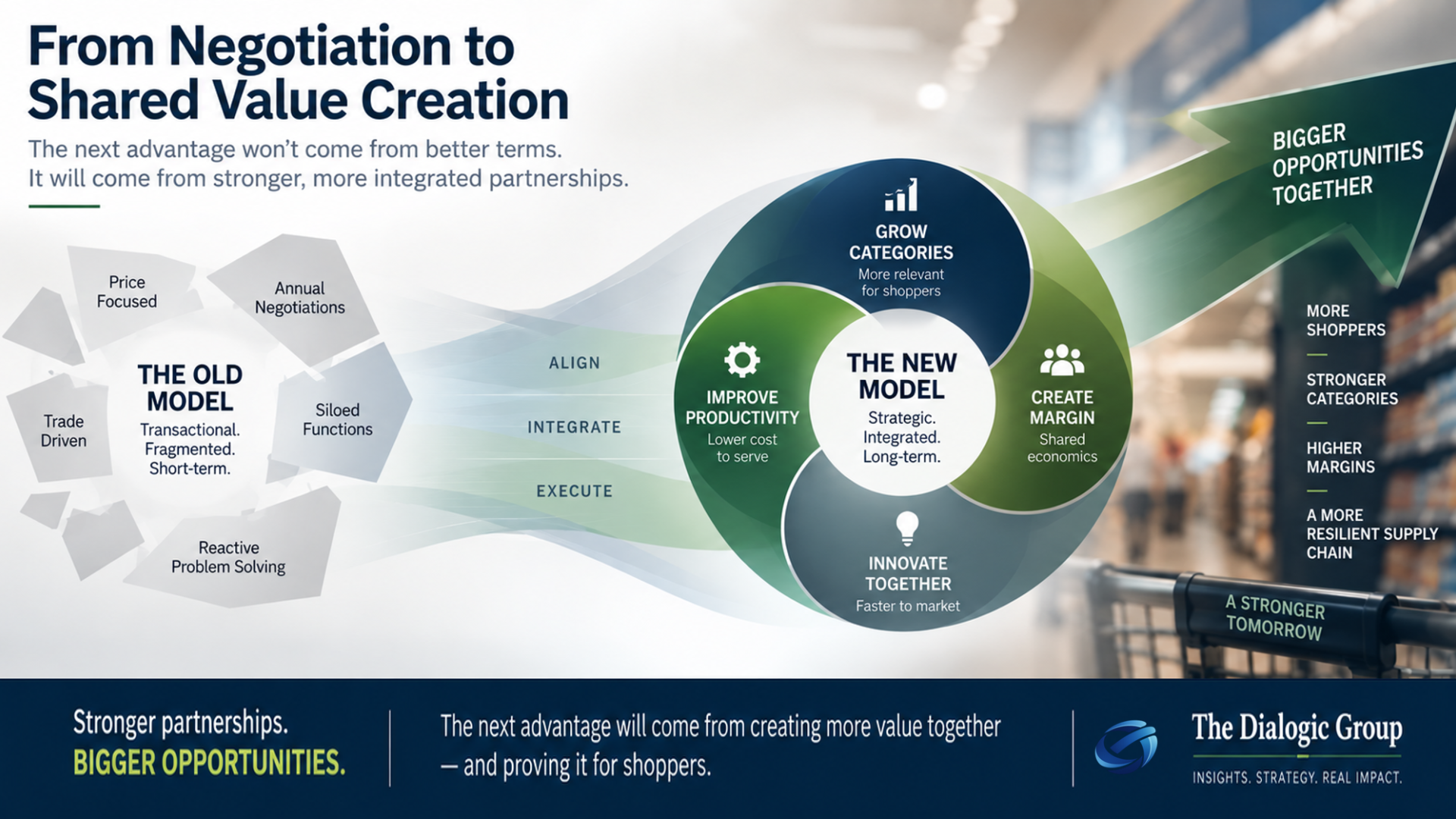
This shift signifies more than an update to joint business planning; it indicates a fundamental overhaul in how retailers and manufacturers generate, evaluate, and distribute value.
For years, retailer-supplier relationships centered on an annual cycle of cost negotiations, trade funding arrangements, promotional calendar planning, and margin discussions. However, in today’s evolving retail environment, characterized by retail media, digital commerce, AI, supply-chain automation, private brands, and rapidly shifting consumer behaviors, this traditional approach has become increasingly outdated.
P&G CFO Andre Schulten at the Barclays Global Consumer Staples Conference (audio recording)
The industry implication is substantial. Negotiation is shifting from individual product margins to the overall creation of enterprise value.
That shift will drive five important changes across the industry
1. Annual negotiations are becoming a constraint on growth.
The most effective retailer–supplier partnerships will extend beyond annual discussions of costs, margins, and trade to encompass three-year strategies focused on continuous value creation through category growth, innovation, merchandising, retail media, supply chain efficiency, shopper engagement, and profitability.
The key implication is clear: retailers and suppliers that continue to manage strategic relationships solely through annual negotiations risk maximizing the short-term deal while neglecting long-term growth potential. Moving forward, success will favor partnerships that approach the relationship as a multi-year economic system rather than a once-a-year bargaining event.
2. Trade spending will have to prove it deserves to exist.
Allocating funds solely to increase volume is being increasingly scrutinized. Every dollar spent on trade activities must now show it generated additional sales, protected or improved margins, attracted new customers, expanded market share, or strengthened a strategically vital category. Without clear and justifiable returns, securing funding will become progressively more difficult.
The clear implication is that trade expenditures are shifting from negotiated entitlements to strategic investments that must deliver measurable returns. Retailers and manufacturers who continue to focus on activity rather than tangible economic impact risk diminishing value, all while believing they are promoting growth.
3. Retail media will become too important to leave to the media team.
Retail media is rapidly evolving from a supplementary advertising channel to a primary driver of commercial growth. Going forward, media investment, pricing, merchandising, innovation, and shopper activation must be coordinated within a unified economic system rather than treated as isolated functional decisions.
The statement is provocative: retailers and suppliers that keep managing retail media independently risk maximizing impressions while overlooking broader category growth opportunities. Successful players will link every media dollar to clear impacts on demand, basket size, margin, household penetration, and overall category performance.
Retail media will no longer be evaluated solely by expenditure or reach. Instead, its success will be determined by its impact on the business’s economic performance.
4. If the supply chain cannot protect growth, it is destroying value.
Availability, inventory productivity, forecast accuracy, lead times, and cost-to-serve can no longer be dismissed as mere operational hygiene. Each stockout, excess case, late shipment, and forecasting error represents a direct commercial failure that diminishes sales, reduces margins, ties up working capital, and damages shopper trust.
The consequences will grow more severe. Suppliers that create demand but fail to convert it reliably will diminish in strategic importance. Retailers will allocate more shelf space, innovation support, media investment, and growth opportunities to partners (including private-brand suppliers) who can generate demand and achieve better economic results.
Volume alone will no longer matter strategically. Suppliers that consistently generate operational obstacles will increasingly be deprioritized in selection processes, innovation initiatives, and collaborative investments.
Put simply, if a supplier cannot improve the economics of product distribution and shelf presence, its growth prospects will matter less.
5. Buyer–salesperson relationships will no longer be enough to create strategic value.
The traditional model, where a buyer and salesperson negotiate terms and then push decisions through their respective organizations, is becoming structurally inadequate. Growth now depends on category management, marketing, retail media, technology, supply chain, finance, and senior leadership working against the same economic agenda.
The commercial consequence is significant: retailer–supplier relationships that cannot align these functions will move more slowly, execute worse, and leave value on the table. Strategic agreements made in the executive suite are worthless if they unravel at the buyer, brand, media, or supply-chain level.
The executive consequence is even sharper. Siloed decisions will increasingly show up as missed growth, duplicated spend, margin leakage, and slower execution, and senior leaders will be expected to own those outcomes. When functions optimize their own KPIs at the expense of the broader partnership, leadership will need to intervene quickly, reset incentives, and resolve trade-offs before value is destroyed.
Shared scorecards, explicit decision rights, cross-functional ownership, and rapid escalation will therefore become mandatory, not optional.
This exposes an uncomfortable reality. Executives can no longer delegate collaboration and still expect enterprise-level results. If the organization cannot make integrated decisions, the partnership will underperform, no matter how strong the strategy looks on paper.
Alignment without execution is not partnership. It is theater.
The implications are substantial for manufacturers. Brand strength alone will no longer protect strategic relevance.
- A powerful brand may still earn attention, but it will no longer guarantee influence, investment, or preferred partnership status. Retailers will increasingly expect manufacturers to bring a broader growth system: innovation, consumer insight, retail media effectiveness, demand intelligence, supply-chain reliability, and measurable category economics.
- The warning is more severe than many manufacturers realize: if a supplier cannot help improve the retailer’s P&L, it risks being reduced from strategic partner to branded vendor. Scale, heritage and consumer awareness will not compensate for weak execution, poor economics or fragmented capabilities.
- Retailers will increasingly concentrate data access, media support, innovation opportunities and executive attention around suppliers that can create value across the entire commercial system.
- Manufacturers that continue to lead with “our brands” instead of “your economics” will lose influence.
- Brand equity may open the door. Failing to create enterprise value will push you back out.
For retailers, not every supplier deserves strategic status
- Retailers should prioritize their most strategic suppliers; those capable of simultaneously enhancing category profitability, boosting shopper relevance, accelerating innovation, and lowering overall costs- by dedicating their highest levels of collaboration, executive focus, and investment.
- The result is straightforward: suppliers that provide high volume but fail to enhance the retailer’s profitability will be more easily replaced. Access to strategic partnerships will increasingly depend on demonstrable value creation, rather than on historical ties, scale, or longstanding relationships.
- Retailers that distribute their strategic focus evenly among suppliers risk diluting their resources. Success will favor those who concentrate efforts where the economic returns are greatest.
For industry, the old negotiation model is becoming a competitive liability
- The upcoming era of retailer–supplier relationships will be characterized not by who negotiates the harshest annual terms, but by who constructs the most robust commercial ecosystem centered on growth, profit margins, media, innovation, data, and supply chain efficiency.
- The warning is clear: retailers that persist in viewing negotiating leverage as a substitute for strategic advantage may succeed in closing deals but suffer financially. Manufacturers that depend on trade dollars, brand strength, or scale to maintain influence risk becoming overly transactional and increasingly replaceable.
The center of gravity is shifting from value extraction to value creation
This means success will not depend solely on which companies negotiate the hardest or spend the most. Instead, it will depend on organizations that generate greater overall economic value within the system, secure their appropriate share of that value, and demonstrate a measurable return on their efforts.
The harsh truth is that companies that can't show they generate more value than the friction they cause will ultimately lose investment, influence, and relevance. Being a major customer or a dominant supplier won't suffice; if you can't enhance the system's economics, the system will adapt to bypass you.
The leadership question is becoming unavoidable. Leadership teams should reconsider labeling every major partnership as strategic. The critical question is which alliances merit a three-year investment, deeper data collaboration, cross-functional support, and executive sponsorship, and which should remain transactional.
Leaders must confront the question: If a relationship cannot significantly enhance category growth, margins, productivity, and shopper value, why categorize it as strategic? In the future, strategic status must be earned, not assumed.
The tougher question for CEOs: which long-standing “strategic partnerships” would still qualify if they had to demonstrate their current economic value?
 Thom Blischok serves as Chairman and CEO of The Dialogic Group, LLC, where he provides strategic guidance to leading retailers, technology innovators, consumer packaged goods companies, and investment firms specializing in retail transformation, artificial intelligence/robotics, operations, and consumer engagement