Food Industry Summit Reveals How Food, Health and Loyalty Are Being Rewritten

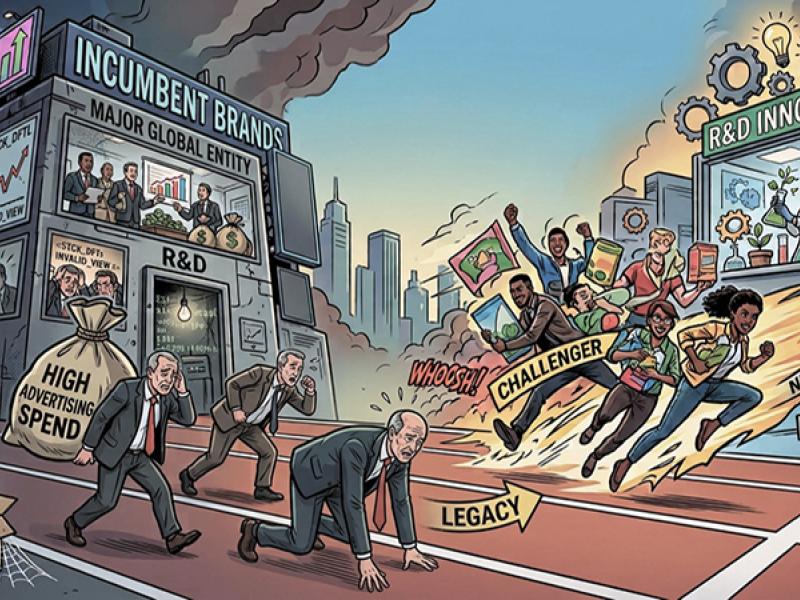
REINVENTION was a pervasive theme at Saint Joseph’s University’s 2026 Food Industry Summit in Philadelphia, as speakers painted a picture of a food industry under intense pressure to change, from product formulation and merchandising to loyalty and shopper experience.
Galen Karlan Mason, CEO and founder of GreenChoice PBC, argued that misaligned incentives have hard wired an epidemic of diet related disease into the U.S. food system. He cited data showing 600,000 Americans die each year from poor nutrition and that diet related illness drives about 1.1 trillion dollars in health care costs and lost productivity, roughly equal to what Americans spend on food.
Ultra processed foods now account for more than half of U.S. calorie intake, aided by cheap ingredients such as high fructose corn syrup and long standing regulatory gaps that allowed most new food chemicals to enter the supply without FDA review.
Students from the Saint Joseph's University department provided some reactions of their own from the Summit. Read them here.
Karlan Mason enumerated three forces now converging to change those incentives:
- Shift to prevention. Government is shifting from paying for sickness to paying for prevention, as regulators tighten rules on food additives, restrict the use of federal dollars for non-nutritious items, and push hospitals to align menus and procurement with federal nutrition guidelines.
- Shopper wariness. Consumers are rapidly losing trust in the food supply and are reading labels more closely, with a growing majority trying to avoid processed foods and artificial ingredients.
- Weight-loss drugs. the rise of GLP-1 medications is reshaping baskets, as millions of users buy more produce, fewer indulgent snacks and expect clearer nutritional guidance.
Those trends, he said, are already reshaping CPG strategy. Legacy food companies are buying health forward brands, cutting legacy SKUs and redirecting investment toward protein, fiber and cleaner labels, while private label gains share as retailers use it to meet health, margin and differentiation goals.
Karlan Mason framed the choice for brands and retailers in two paths. They can work upstream to change incentives through research, policy and education, or they can align to the new incentives by making it easier for shoppers and institutions to find, fund and favor healthier options. GreenChoice is positioning itself as a data and scoring platform that helps partners do both.
Brand creation and evolution
The summit also looked at growth from an entrepreneurial angle. Carbone Fine Food’s “Launch Code” session, led by CEO Eric Skae, focused on how the premium sauce brand moved from zero to 100 million dollars in five years by choosing the premium tier, obsessing over quality, telling a clear brand story and resisting the urge to chase distractions. Skae stressed food as lifestyle, disciplined execution at the shelf and maintaining a start-up mentality even as the brand scales.
Innovation was not limited to products and policy. Former Crayola CMA Victoria Lozano’s “Creativity as a Life Skill” talk argued that creativity has become a core career skill and a competitive necessity for consumer brands. She defined creativity in practical terms – curiosity, imagination, risk taking, problem solving and collaboration – and tied it directly to innovation, adaptability and AI resilient roles.
In a world dominated by short form content and passive scrolling, she said, creativity is “vulnerable and at risk” unless individuals and organizations deliberately practice habits such as generating ideas daily, creating space for boredom, asking better questions and cross pollinating thinking.
AI-powered demand
The summit also tackled how AI will reshape demand creation itself. In a presentation on “Loyalty 3.0 and Agentic Commerce,” TCC Global executive Julie Lyle said the next loyalty battle may occur before the cart is built, as AI agents help shoppers decide where to send their baskets.
She distinguished between generative AI, which creates content, and agentic AI, which can follow goals, compare options and execute transactions. Because grocery purchases are repetitive and rule based, they are among the first to be automated, which could reduce retailers to fulfillment layers if they rely only on convenience and price.
Lyle urged retailers to simplify and stabilize promotions, build structural loyalty through subscriptions and predictable value, and become “agent ready” by ensuring loyalty data and value propositions can be recognized by machine decision makers.
She argued that experiential loyalty will matter more, not less, as agents compress functional differences among offers. Cultural partnerships, gamified collection mechanics and aspirational rewards can create emotional preference that is harder for algorithms to optimize away.
New alignments ahead
Taken together, the 2026 Food Industry Summit sessions underscored that food industry growth will hinge on aligning commercial models with health, redesigning incentives, and investing in the human skills and data capabilities that AI cannot easily replace.
Speakers challenged leaders to stop treating nutrition, creativity and loyalty as side topics and instead treat them as levers for systemic advantage in a market where regulators, consumers and algorithms are all raising the bar.
Ron Margulis is managing director of RAM Communications. LinkedIn